Mission-ready

Product Software
Engineer

Hi, I'm Ihor — I turn ideas into reliable, scalable products — from user experience and architecture through delivery.

move your cursor → scatter stars

Illustrated portrait of Ihor Levchenko

01 / About

I turn complex ideas into products that feel simple.

I’m a product-minded software engineer with a strong frontend foundation and ten years of experience. I work across UX, architecture, and delivery — turning ambiguous requirements into dependable products. I’ve built software for cybersecurity, payments, e-commerce, and data platforms, while also creating products of my own, including DoneHero.

02 / Projects

Selected work

Productivity2026

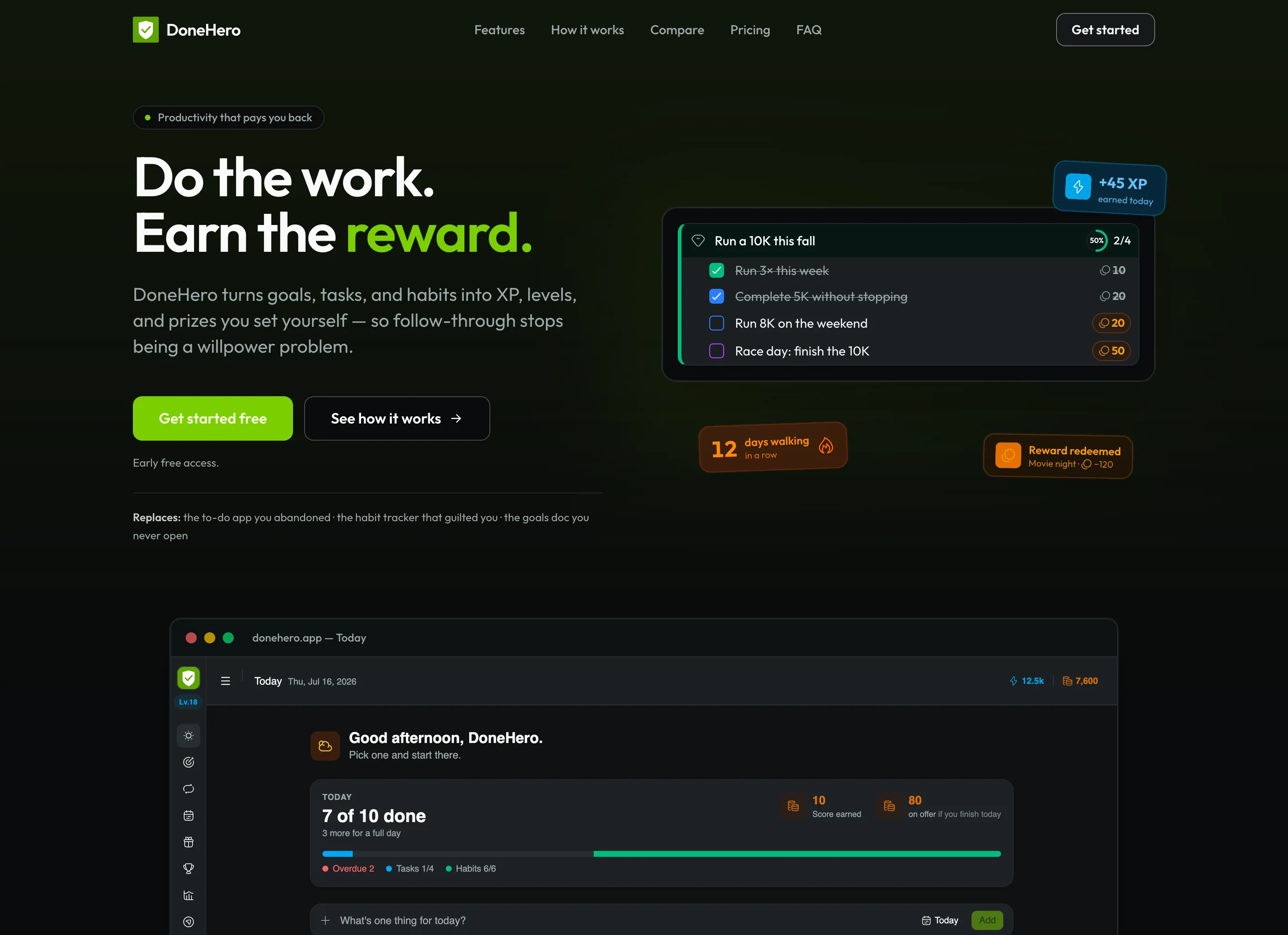
DoneHero

Goals, tasks, and habits turned into XP, levels, and self-defined rewards — a productivity system that pays you back.
Visit product
DoneHero productivity application
Product2025

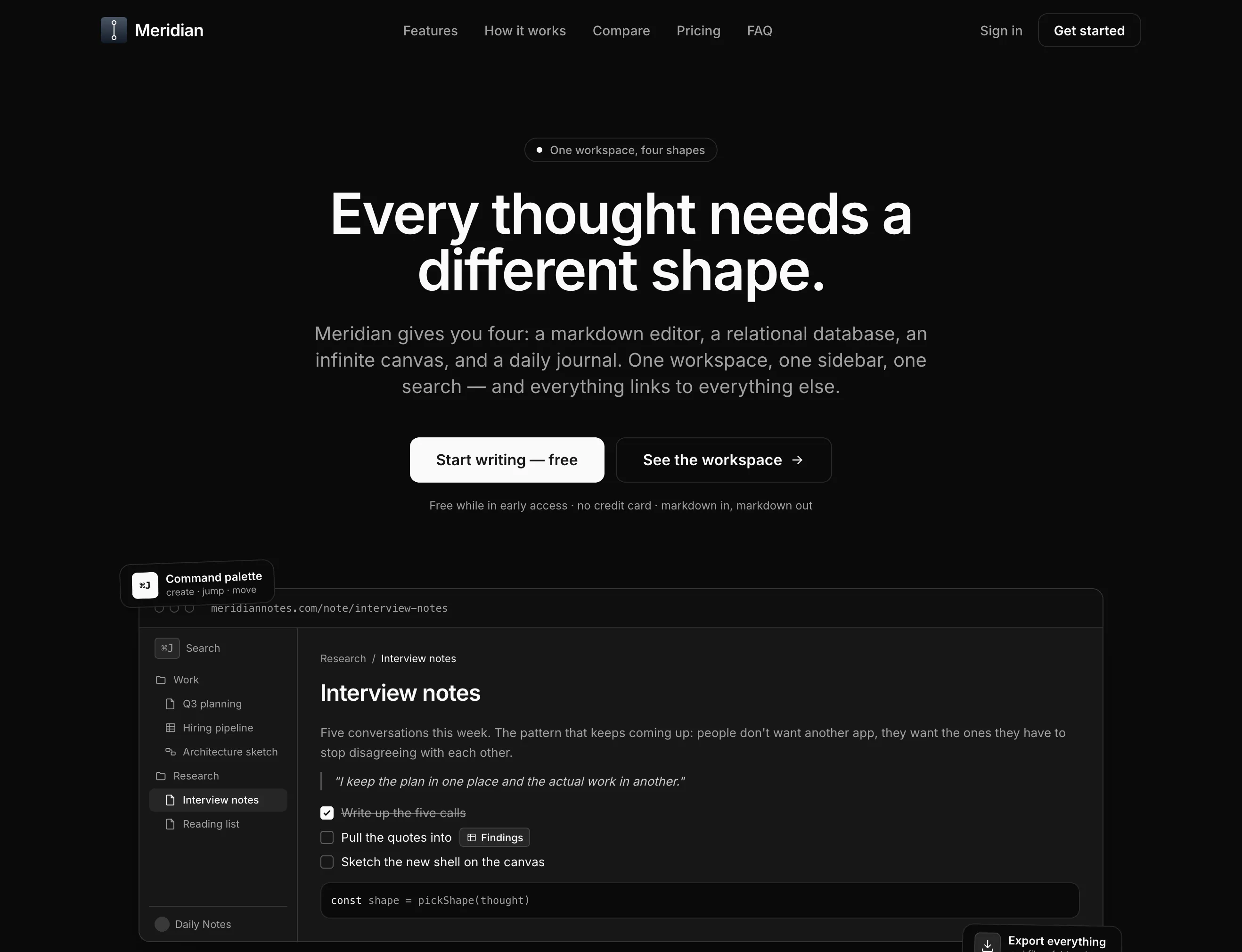
Meridian notes

A note-taking app with AI-powered summarization, voice-to-text transcription, and multi-device sync.

Visit product
Trading system2022

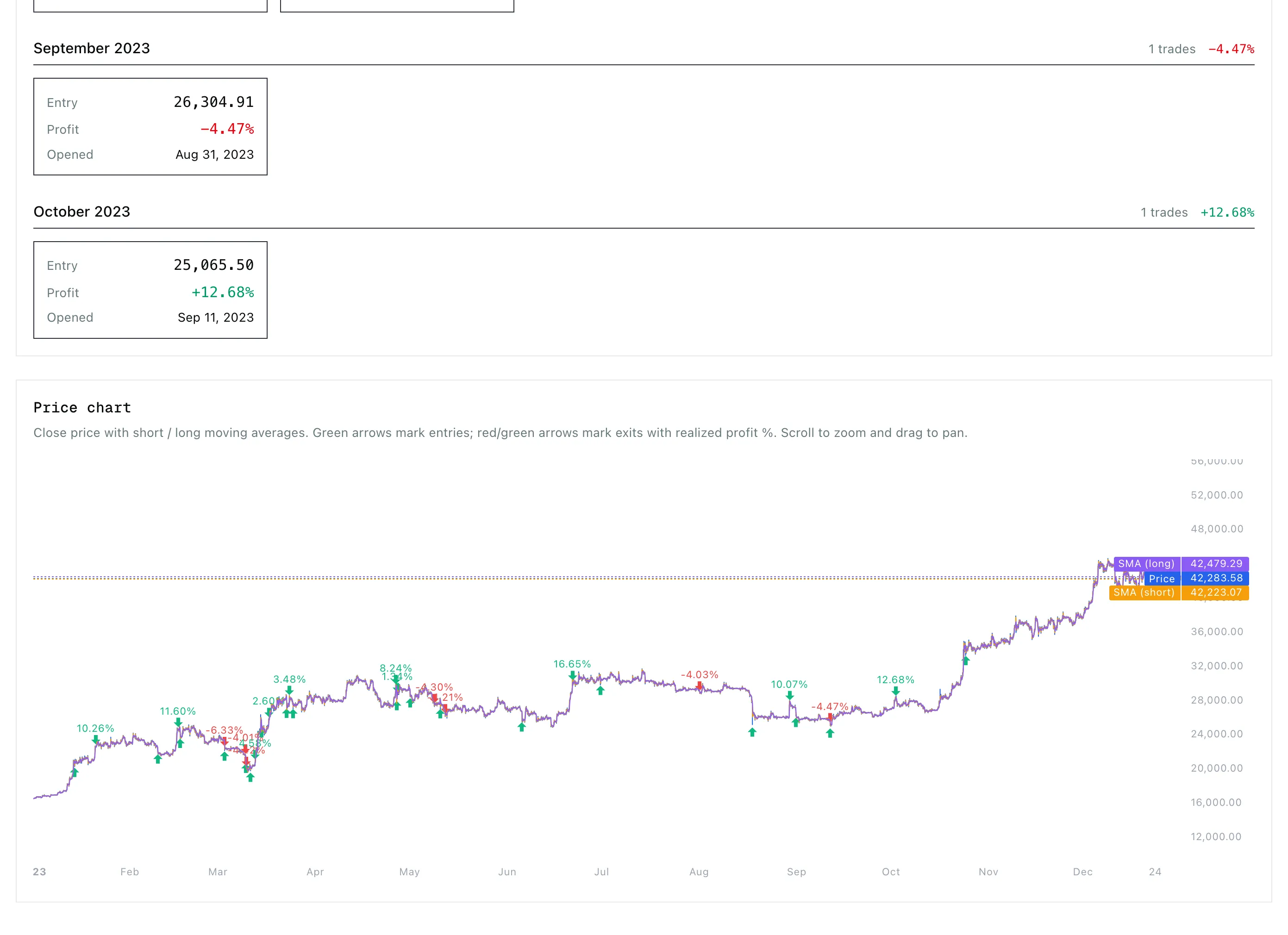
Cbot

An adaptive trading bot combining machine learning, technical strategies, indicators, and stop-loss risk controls.
Productivity2026/ Case study

DoneHero

Making progress visible enough to sustain motivation.

DoneHero productivity application

Problem

Motivation fades when long-term goals feel distant, daily effort is hard to see, and conventional task or habit tools offer little reward beyond checking a box.

Product hypothesis

Turning effort into visible progress — XP, levels, scores, and self-defined rewards — can make small daily actions feel meaningful and keep users moving toward larger goals.

My role

Product strategy, UX/UI, frontend, backend, database design, and deployment.

Key design decisions

  • Goal → Epic → Task hierarchy that breaks big ambitions into shippable pieces.
  • Difficulty-based XP so effort, not busywork, drives progress.
  • Levels, scores, streaks, insights, and achievements that make progress visible at several time scales.
  • A unified Today view that connects each task and habit to a clear, immediate sense of progress.
  • Self-defined rewards users can redeem, linking completed effort to personally meaningful motivation.
  • An Inbox for frictionless quick capture.

Technical challenges

  • Balancing the XP and reward economy so progress feels attainable without making the system easy to game.
  • Keeping task, habit, and goal progress consistent across every view.
  • Building responsive, information-dense interfaces that stay calm.
  • Modeling recurring habits and streaks reliably.
  • Implementing it end to end with React, TypeScript, Fastify, and PostgreSQL.

Validation & iteration

Ran clickable prototypes past target users, folded in usability feedback each round, and cut ideas that tested poorly — an early points-only model was scrapped once users said streak pressure felt like the trackers they were escaping.

Outcome

The resulting system pairs every completed action with visible progress and lets users turn that progress into rewards they chose themselves, replacing guilt-driven productivity with a clearer feedback loop.

Product2025/ Case study

Meridian notes

Combining powerful note-taking workflows without the usual friction.

Problem

Note-taking apps often force a trade-off between a focused writing experience and advanced capabilities, while unreliable saving, lost context, and desktop-first navigation interrupt the work.

Product hypothesis

The best parts of established note-taking tools can be combined into one distinct, calm workspace if persistence and navigation are treated as core product features.

My role

Product strategy, UX/UI, application architecture, frontend, backend, and persistence design.

Key design decisions

  • Combined structured notes, AI summarization, voice-to-text, and multi-device sync in one focused workflow.
  • Used debounced updates to save edits efficiently without sending a request on every keystroke.
  • Protected unsaved changes before leaving a page or switching notes.
  • Stored the latest reading and editing position locally with a TTL so users can resume context without retaining stale state forever.
  • Designed a mobile bottom bar that keeps primary note actions within thumb reach.

Technical challenges

  • Coordinating debounced saves with navigation so the newest edit is never silently discarded.
  • Reconciling local editing state with synchronized server data across devices.
  • Restoring note position reliably while expiring outdated local state.
  • Adapting an information-rich workspace to a compact mobile navigation model.
  • Integrating AI and transcription features without interrupting the core writing flow.

Validation & iteration

The design was checked against interruption-heavy workflows: rapid editing, switching notes before a debounce completes, leaving the page with pending changes, reopening a note, and navigating on a mobile screen.

Outcome

Meridian became a cohesive note workspace where advanced tools stay close at hand, edits are protected through navigation, context can be resumed, and the mobile experience has purpose-built controls.

Trading system2022/ Case study

Cbot

Building a trading system that learns while keeping risk bounded.

Problem

Fixed trading rules can become less effective as market behavior changes, while unconstrained automated decisions can turn a weak signal into an outsized loss.

Product hypothesis

A bot can make more disciplined decisions by combining machine-learning signals with explicit strategies, technical indicators, and non-negotiable risk controls.

My role

System design, strategy research, machine-learning experimentation, implementation, and risk-control design.

Key design decisions

  • Combined machine-learning outputs with rule-based strategies instead of relying on a single prediction source.
  • Used technical indicators as measurable inputs for entries, exits, and market-state assessment.
  • Applied stop-loss rules as a hard risk boundary independent of the strategy signal.
  • Recorded strategy performance so the system could compare results and improve its decision policy over time.

Technical challenges

  • Preparing market data and features without leaking future information into model training.
  • Coordinating signals from strategies, indicators, and machine-learning models when they disagree.
  • Separating strategy optimization from risk controls so self-improvement cannot remove safety boundaries.
  • Evaluating changes across different market conditions rather than overfitting to one period.

Validation & iteration

Strategies were evaluated against historical market periods with indicators, model signals, and stop-loss behavior assessed separately before being combined.

Outcome

Cbot established a modular foundation for testing trading ideas, enforcing downside limits, and feeding observed strategy performance back into future iterations.

03 / Get in touch

Let's build something
worth shipping.

Open to product engineering roles and select freelance work. I usually reply within a day.